

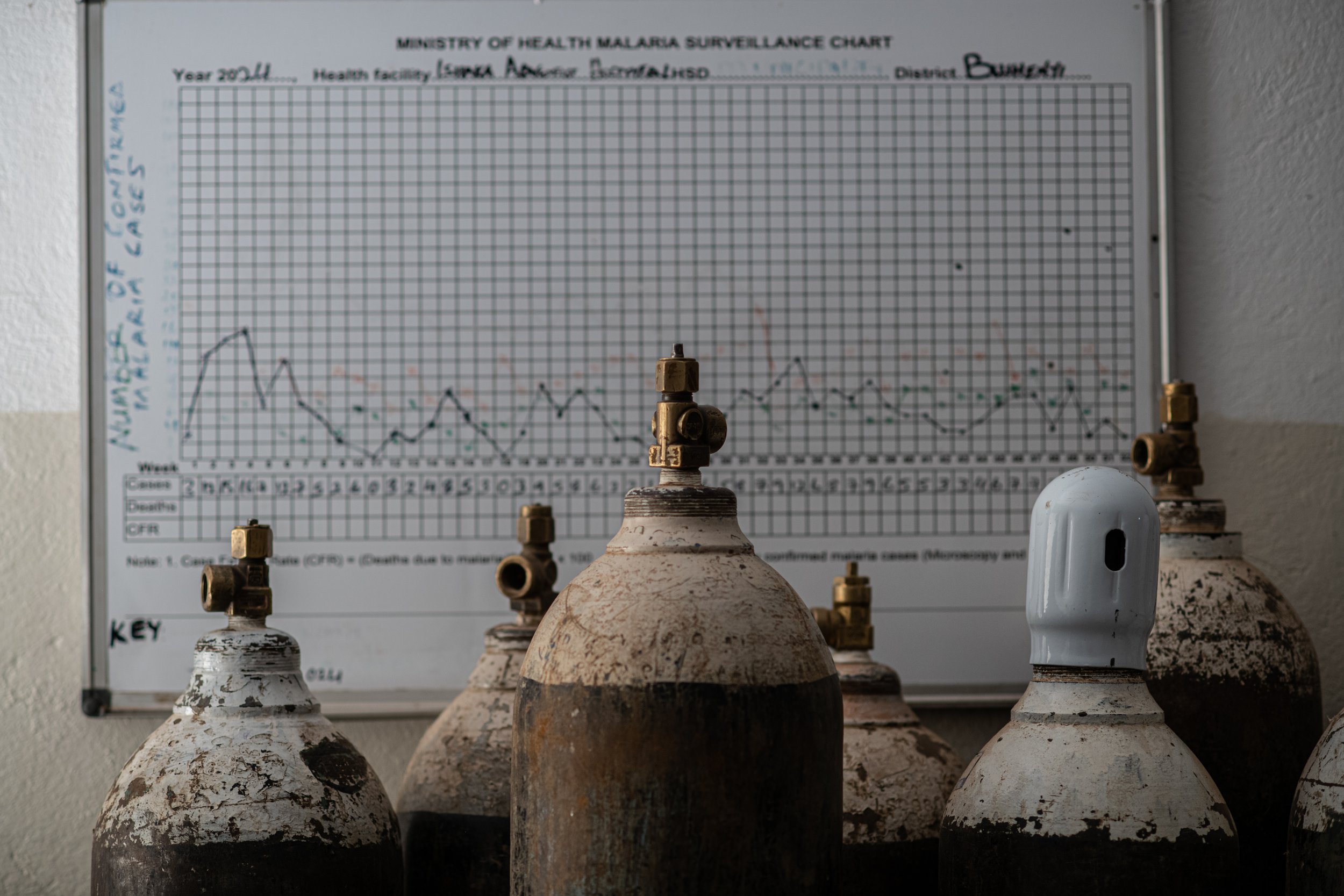
The Road to Solving Oxygen:
What Ethiopia Learned about Building Systems, not just Infrastructure
Opinion piece by Dr. Lia Tadesse Gebremedhin
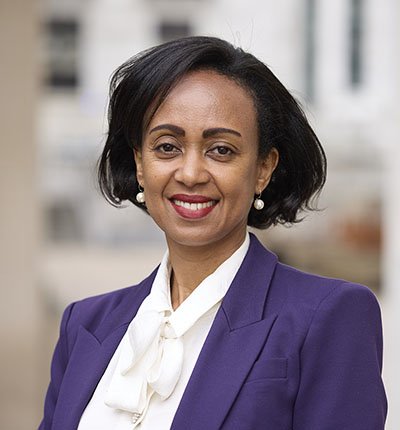
Dr. Lia Tadesse Gebremedhin , Former Minister of Health, Ethiopia
“The COVID era showed us we can mobilise billions quickly for health infrastructure. Although access improved significantly, sustainable access requires building a whole ecosystem.”
As global health moves from aid to investment, the missing piece is not more equipment, but financing that keeps working after the grant cycle ends.
The global health community is converging on a familiar argument: we need to move from aid to investment. Aid budgets are tightening, and the era of large, grant-funded vertical programmes is giving way (at least in rhetoric for now) to market development, private sector businesses, and sustainable service delivery.
I am largely in agreement with this direction, but the shift only means something if it changes how we finance improvements in health systems. How do we go from ‘investment’ as a rebranded grant that buys inputs once, to an investment that builds self-sustaining local markets?
Medical oxygen is a revealing test case. After COVID-19, it was reasonable to assume that the oxygen problem had been substantially addressed. Governments, donors, and private partners installed publicly-owned PSA plants, mobilised industrial suppliers, and deployed thousands of oxygen concentrators. But, the Lancet Global Health Commission on Medical Oxygen Security, reporting in 2025, found otherwise, that 70% of people in LMICs still lack reliable access to medical oxygen when they need it. In sub-Saharan Africa, it’s worse: the figure is 91%. Patients continue to die from preventable conditions like pneumonia, birth complications, and surgical emergencies in facilities where oxygen exists in-country but does not reliably reach the bedside.
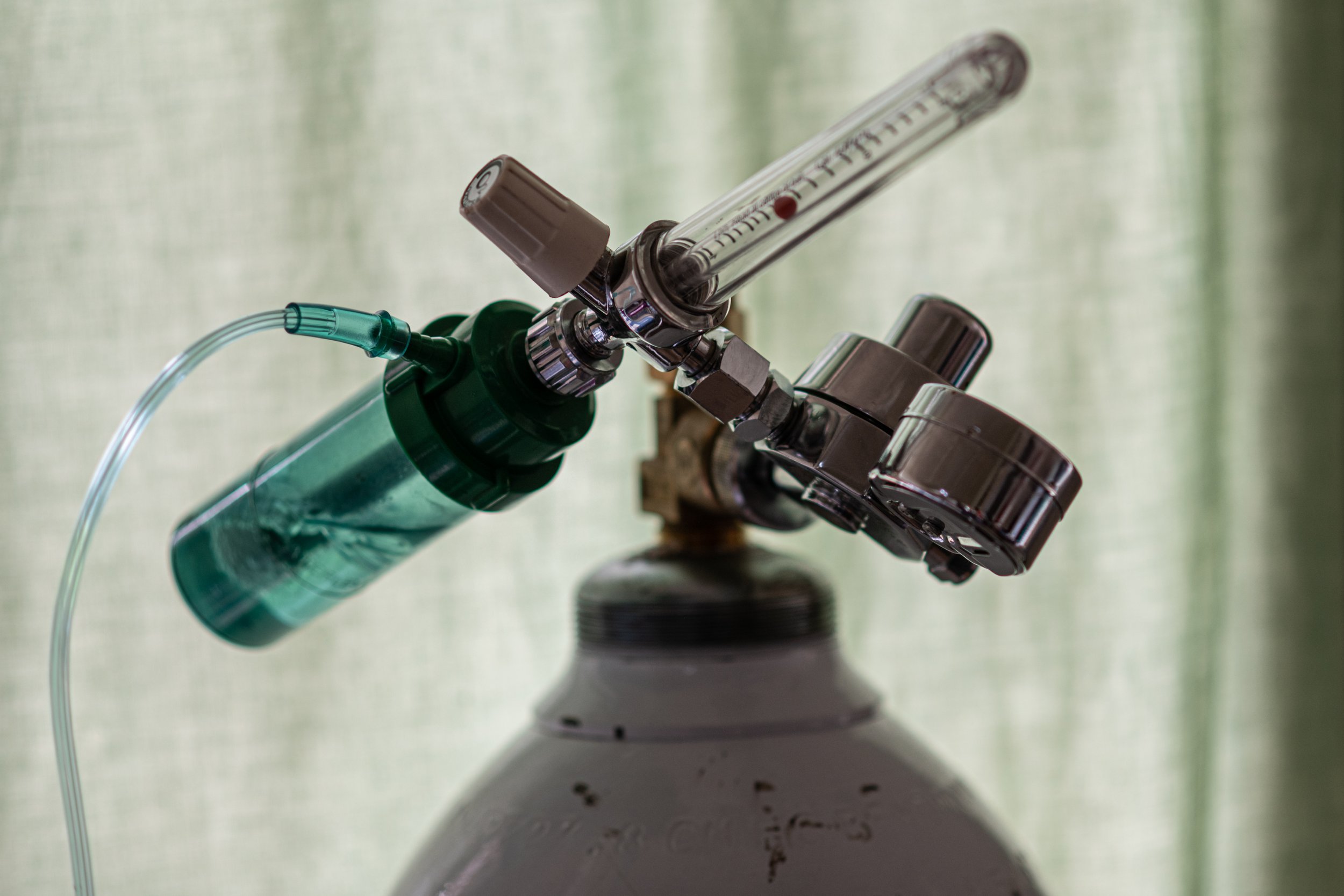
A decade of investment in oxygen infrastructure has delivered genuine progress, but installing equipment is not the same as delivering oxygen to a patient. The constraint has shifted, so it is no longer a question of whether countries can produce oxygen, it is whether they can operate, distribute, and finance it sustainably. Plants run at a fraction of their capacity because spare parts and maintenance are unavailable, and cylinders sit idle because no distribution system connects them to the facilities that need them. Meanwhile, healthcare workers do not prescribe oxygen correctly because they were never trained, and hospitals have piping but no revenue model to sustain its use. The businesses, service networks, and delivery models needed to keep all of this running reliably have not yet been built. The equipment is there, but the ecosystem around it is not.
I can speak to this from direct experience. In 2016, Ethiopia had three oxygen production plants serving a country of more than 100 million people. The Ministry of Health developed one of the first National Medical Oxygen roadmaps in sub-Saharan Africa that year, and the work began in earnest. In 2019 a public-private partnership model was established in the Amhara region, where local businesses took on plant operations, with clinical and technical training built into the agreement and service provided at an affordable, structured tariff. I served as Minister of Health from 2020 through 2024, which meant I led the response to COVID-19 while simultaneously trying to build the longer-term oxygen system the country needed. By 2022, Ethiopia had 38 plants and had expanded national production capacity nearly ninefold. Government resources, international partners, bilateral donors, and the private sector all contributed. It was a genuine achievement, and it required sustained national leadership to deliver.
And yet the end-term evaluation we conducted in 2021 showed us that the work was far from complete. Those plants were running at 55% of their potential capacity, eleven were non-functional, and four not installed / commissioned. A quarter of health facilities remained more than 200 kilometres from a working oxygen source. At health centers where most Ethiopians receive their first point of care, fewer than one in four had reliable access. We had invested in infrastructure, but it became clear that we had not yet built the ecosystem to sustain it.
Our response with the next phase of the roadmap was a significant broadening of scope. Oxygen came under formal regulation by the Ethiopian Food and Drug Authority and was added to the national essential medicines list. New clinical guidelines for rational oxygen use followed, along with training for health workers to apply them. A hub-and-spoke distribution model meant facilities without their own plants could receive regular, accountable supply from a regional source. On the financing side, a Sustainable Financing
Directive and user fees gave facilities a revenue model to cover operations and maintenance rather than depending indefinitely on donor procurement cycles. The Ethiopian Pharmaceutical Supply Service is now piloting liquid oxygen distribution. Each of these steps addressed a different link in the chain between a working plant and a patient receiving oxygen.
Although we have come a long way, the distance between what Roadmap II sets out and where Ethiopia stands today remains significant. I raise this not to diminish what has been achieved, but because it illustrates the core point: sustainable access to a lifesaving medicine requires sustained investment across regulation, workforce, supply chain, and financing and the current model of global health financing does not reliably provide that.
What is missing across many countries is what some call the “missing middle”: the service operators that deliver maintenance, logistics, spare parts, monitoring, training, last-mile delivery. These operators, which could be local businesses, enterprises within government institutions, or public-private partnerships, cannot exist without conditions that make them viable: procurement that pays for outcomes rather than inputs, revenue models that sustains them, regulation that enables market entry, and payment terms that allow a local business to stay solvent. When those conditions are absent, even the best-equipped facility becomes unreliable over time. When you look at how oxygen delivery works in high-income countries, like in the UK or Sweden, no one expects a hospital to manufacture, maintain, and distribute its own oxygen. There are local markets, service contracts, and regulatory frameworks that make reliability possible. Building those markets in low-income settings is the work that global health financing has not yet learned to do well.
There is no single model that will work everywhere. Some contexts will require strengthened public systems with protected operational budgets. Others will need performance-based public-private partnerships of the kind we piloted in Amhara. Others still may be best served by local service providers operating backed by predictable national procurement. What matters is that the financing model pays for a reliable service, not just the equipment that enables it, and that local actors (SMEs, governments, regulators) are accountable for whether it works. Governments and global actors need to partner on more initiatives to build the local operating capacity and market conditions that convert existing infrastructure into sustained patient access, across different country contexts and delivery models. That kind of work deserves the same seriousness of investment as the infrastructure it supports.
To governments, I would say that the evaluation that showed us our gaps in 2021 was uncomfortable, but it was the most productive thing we did. Countries that want to build sustainable oxygen access must be willing to look honestly at what is not working. That means embedding oxygen in national budget lines before the next emergency. It means working on fit-for-purpose regulatory frameworks for oxygen delivery. It means procurement reform that allows pooled procurement and more buying power / less fragmentation across the system. And it means insisting that national ownership is not a condition donors impose on us, but a principle we lead with ourselves.
And if you are an international partner or funder: if the shift from aid to investment is to mean something in practice, it has to change how global health gets financed. That means financing the harder, less visible, more consequential work: the workforce, the regulatory capacity, and the business models that allow infrastructure to keep functioning sustainably.
The work that determines whether a patient actually receives oxygen (maintenance contracts, user fee structures, logistics coordination, workforce training) is rarely the work that appears in a funder’s annual report. But it is the work that determines whether billions already invested in infrastructure deliver results or become stranded assets. It means aligning support to country-developed plans rather than donor procurement timelines.
Oxygen matters beyond oxygen. It is, in many ways, the hardest simple thing in health: essential, technically straightforward, but operationally demanding at every link in the chain. If we can build the financing models and local market conditions that make reliable oxygen access possible, the same logic applies to other essential services that fail for exactly the same reasons.
The global community now faces a choice. We can partner with countries through the harder, longer work of turning infrastructure into impact. Or we can declare the job done and move on; wasting the billions already invested. Ethiopia has invested seriously in this challenge and has learned many lessons in the process. The lesson that stays with me is this: equipment without an ecosystem is not a solution. The global health community’s move toward investment thinking offers a real opportunity to get this right. But only if it goes all the way.
Dr. Lia Tadesse Gebremedhin, Former Minister of Health, Ethiopia (2020-2024); Professor of the Practice of Public Health. Global Health and Population, Harvard T.H. Chan School of Public Health
More perspectives from the CoLab
-
![]()
| LIVE |
Commercial lessons learnt from implementing Oxygen-as-a-Service -
![]()
| SEPT 2024 |
Service-based models in oxygen — the benefits analysis -
![]()
| NOV 2024 |
Making Oxygen Access Reliable and Affordable through O2aaS -
![]()
| AUG 2023 |
Learnings from the field: our Oxygen-as-a-Service portfolio -
![]()
| JULY 2025 |
Implementing the Remote Monitoring Unit

Stay in touch
Sign up with your email address to receive news and updates.
Every other month, we deliver all the latest directly to your inbox. You’ll find updates from grantees and the wider medical oxygen ecosystem, invitations to join us at global health events, opportunities to get involved, and more, in our Newsletter - Breathing Room