Building Resilient Local Markets that Deliver for Patients
We are creating the market conditions that support local oxygen SME’s to thrive

Dr Abdu Mukhtar, National Coordinator, The Presidential Initiative For Unlocking the Healthcare Value Chain (PVAC) Nigeria
“You can produce as much oxygen as you want, but if it doesn't get to the patient at the bedside, it's of no consequence. The ultimate goal is for it to reach the patient.”
We now have evidence that local respiratory care businesses can reliably connect oxygen to patients. To build resilient local markets for these businesses, they need backing by the right investment, and the right conditions to grow.
Moving from proven pilots to resilient healthcare markets requires coordinated action across four areas.




Turning fragmented need into investable demand
Most health systems procure oxygen as a commodity, buying cylinders or equipment in one-off transactions. But reliable oxygen depends on supply, maintenance, consumables, and training working together. When procurement can't account for that, purchasing fragments, supply becomes unreliable, and value for money drops.
Oxygen CoLab works with governments to shift procurement from buying products to contracting for outcomes. This includes developing Target Service Profiles that define what reliable oxygen service looks like, and supporting approaches like sub-national procurement consortia that give suppliers the predictable demand they need to invest.
When suppliers have confidence in demand, they scale. When facilities contract for outcomes, patients get oxygen.
Shaping Regulation for Market Growth
Regulation plays a critical role in shaping oxygen markets but in many countries, regulatory frameworks for medical oxygen remain fragmented, unclear, or misaligned with how oxygen is actually delivered. These barriers slow market growth even where demand is high. Responsible businesses that want to operate can't navigate the pathway in, and investors can't assess the risk.
Through our work in Uganda and Nigeria, Oxygen CoLab has mapped these regulatory barriers and identified approaches to address them including tiered frameworks based on provider capacity, strengthened testing and enforcement infrastructure, and clearer guidance for manufacturers and distributors.
When regulation enables rather than blocks market entry, the businesses patients depend on can reach them.

In some markets, oxygen equipment and oxygen as a pharmaceutical face separate regulatory pathways, creating confusion and cost that discourage new providers from entering
Backing the businesses that bridge the gap
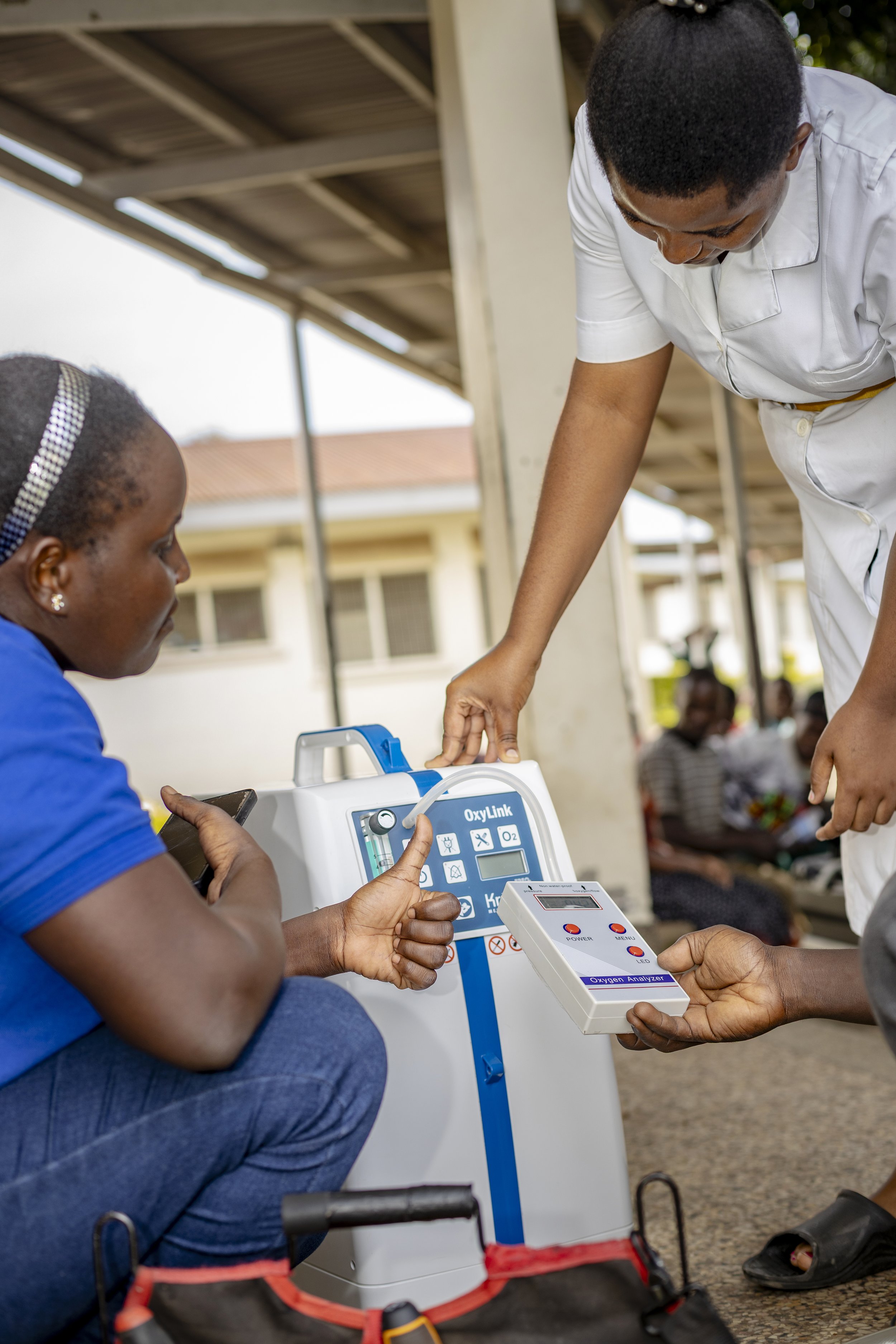
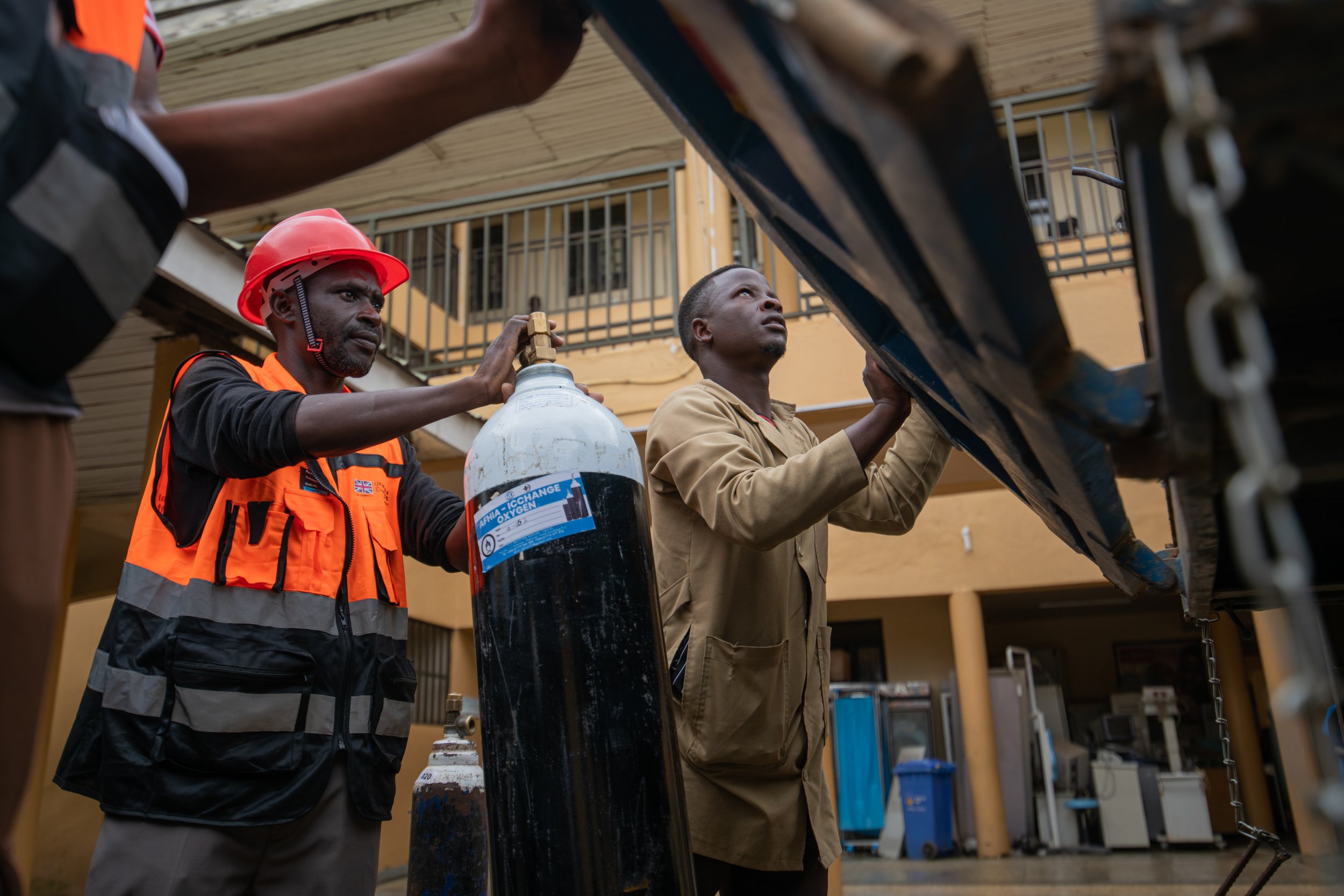
Local small and medium-sized enterprises are the Missing Middle - the businesses that connect oxygen production to patient access. Oxygen CoLab has backed five of these businesses across four countries, and the results are clear.
But most oxygen SMEs struggle to grow. Demand is uncertain, contracts are short-term, and access to capital is limited. Our supplier mapping in Nigeria found that fewer than one in three are reliably profitable, and nearly two-thirds cannot access outside financing.
Growing this layer of the market requires flexible capital, technical and commercial support, and new market entrants. Oxygen CoLab works to de-risk these businesses for investors by demonstrating viable service models, connecting SMEs with blended finance, and identifying oxygen-adjacent companies that could expand into service delivery.
Oxygen use increased 50–70% once supply became reliable, with more than 20,000 patients having been treated through these models.
Following the money and making it work harder
Oxygen financing is often invisible. Spending is buried within broader essential medicines budgets, fragmented across funding streams, and difficult to track. Facilities lack visibility into what's available. Revenue from oxygen is pooled centrally and can't be reinvested locally. This results in no one in the system having a clear picture of what oxygen costs, what's being spent, or where the gaps are.
Oxygen CoLab is working to change this, generating the data and insight needed to make oxygen spending visible across the system, and exploring financing approaches, from revolving funds to insurance reimbursements to blended-finance structures, that coordinate what's already being spent so it goes further, and give suppliers the revenue predictability they need to invest.
We need to fund what lasts - local businesses and the conditions that let them deliver reliably long after the grant cycle ends: fit-for-purpose regulation and tariffs, smarter procurement, and processes that make smaller investments feasible.

Without clarity on financing, oxygen markets remain difficult to invest in. Suppliers can't plan. DFIs can't assess risk. Governments can't allocate effectively.

Kaodili Udeh, Head of Regional Manufacturing, MedAccess
"If we're serious about strengthening health systems across African countries, we have to be willing to invest in the companies that actually operate in those systems. Impact can come from many small investments, not just a few large ones."
Key Resources
Evidence and guidance that is supporting governments to create the conditions for oxygen SME’s to thrive
Oxygen 101
A course that provides foundational understanding of medical oxygen systems, and enables risk-appropriate oversight.
-
![]()
Building a resilient oxygen market in Uganda
-
![]()
Strengthening national oxygen ecosystems
-
![]()
Piloting O2aaS in Kenya

Four Market Failures. One Integrated Response.
No single intervention builds a resilient oxygen market alone. Better procurement without access to finance leaves suppliers unable to invest. Regulatory clarity without SME support leaves no one to walk through the door. Financing without demand aggregation leaves capital with nowhere productive to go.
What makes this approach work is that each component reinforces the others. Predictable demand gives suppliers confidence. Clear regulation lowers the barriers to entry. Capable SMEs translate financing into services. Visible, coordinated spending makes the whole system investable.
This is what it takes to move from aid-funded pilots to self-sustaining markets. We need to fund what lasts, that is, local businesses and the conditions that let them deliver oxygen to patients reliably, long after the grant cycle ends.